
Alcohol Addiction
Signs of Alcohol Dependence
Signs of Alcohol Dependence
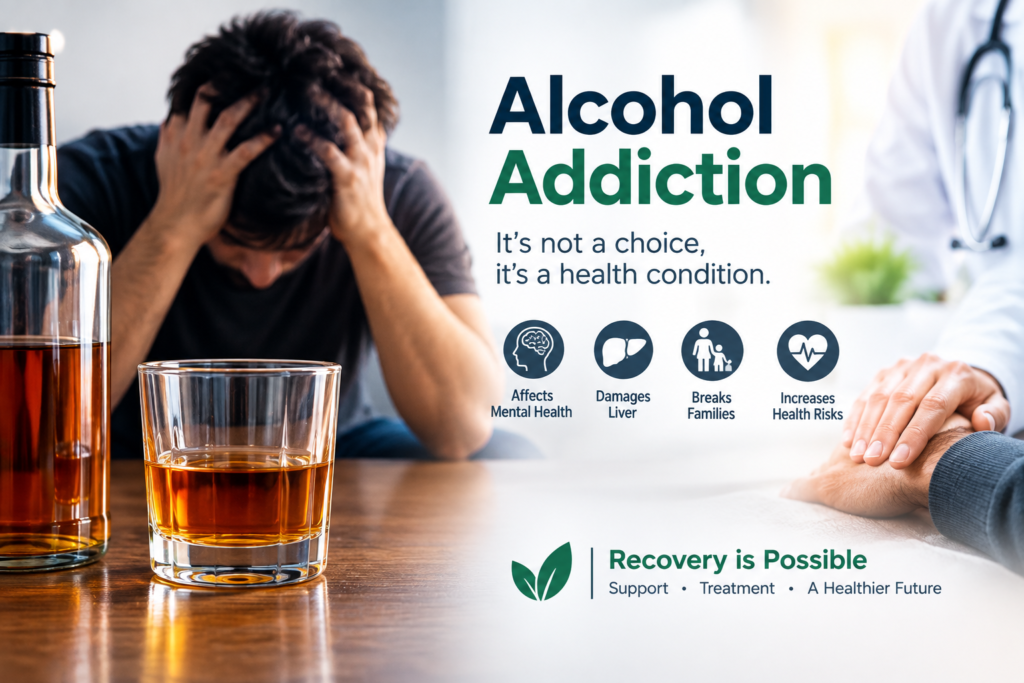
Alcohol dependence is a condition in which a person gradually develops a strong physical or psychological need for alcohol. It can affect daily life, relationships, work, physical health, and emotional well-being. Recognizing the early warning signs can help a person seek professional support at the right time.
What Is Alcohol Dependence?
Alcohol dependence, often associated with Alcohol Use Disorder (AUD), can develop gradually. A person may initially drink occasionally or socially, but over time they may find it difficult to control how much or how often they drink.
Dependence does not always look the same in everyone. Some people may drink heavily every day, while others may experience periods of heavy drinking followed by periods without alcohol.
Common Signs of Alcohol Dependence
1. Strong Cravings for Alcohol
A person may frequently think about drinking or experience a strong urge to consume alcohol, even when they have decided not to drink.
2. Difficulty Controlling Drinking
They may intend to have only one or two drinks but end up drinking more or for longer than planned.
3. Increased Tolerance
Over time, the person may need to drink more alcohol to experience the same effects they previously felt with smaller amounts.
4. Drinking Becomes a Priority
Alcohol may start taking priority over work, studies, family responsibilities, hobbies, or social activities.
5. Continuing to Drink Despite Problems
A person may continue drinking even after experiencing health problems, relationship difficulties, financial problems, or problems at work or college.
6. Withdrawal Symptoms
When alcohol use is reduced or stopped, some people may experience symptoms such as:
Shaking or trembling
Sweating
Anxiety or irritability
Difficulty sleeping
Nausea
Headache
Restlessness
Increased heart rate
Severe withdrawal can be dangerous and may require urgent medical care.
7. Drinking Alone or Hiding Alcohol Use
Some people may begin drinking secretly, hide bottles, or avoid discussing how much they drink with family members or friends.
8. Neglecting Responsibilities
Alcohol use may interfere with regular responsibilities such as going to work, attending classes, completing household tasks, or caring for family members.
9. Repeated Attempts to Stop Drinking
A person may try to reduce or stop drinking several times but find it difficult to maintain those changes without support.
10. Changes in Mood and Behaviour
Problematic alcohol use can be associated with changes such as irritability, mood swings, anxiety, low mood, anger, or social withdrawal.
Physical Signs That May Occur
Long-term heavy alcohol use can be associated with physical changes, including:
Poor sleep
Fatigue
Tremors
Frequent stomach problems
Changes in appetite
Reduced concentration
Poor coordination
Frequent hangovers
These symptoms can have many possible causes, so they should not automatically be assumed to mean alcohol dependence.
How Alcohol Dependence Can Affect Daily Life
Alcohol dependence can affect several areas of life:
| Area | Possible Impact |
|---|---|
| Physical health | Sleep problems, injuries, and other alcohol-related health problems |
| Mental well-being | Anxiety, mood changes, and emotional difficulties |
| Family | Arguments, loss of trust, and relationship problems |
| Work/Studies |